Friday, May 8, 2009

Banks Bomb on Stress Tests for Minority Lending


Earl Ofari Hutchinson


A buoyant Treasury Secretary Timothy Geithner reassured the public that the big 19, that’s the 19 giant banks and financial houses that to hear Geithner tell it the fate of Western capitalism rests on, have passed the Treasury imposed “stress” test with if not flying colors, at least steady drip colors. That wasn’t hard to do. Taxpayers greased the skids of the 19 with more than $50 billion in handouts. And the stress tests were puff ball tests that imposed neither tough nor new government enforced financial requirements or restrictions on the banks.
The debate rages just how much taxpayer cash the banks and financial houses really need, how much more they’ll need, how long they’ll need it, and will the money really ensure permanent solvency. But forgotten in the hubbub over the Geither glossed report is the painful fact that thousands of black and Latino homeowners are still left holding the financial bag for the sub prime mess that taxpayers are forced to bail the banks out of.
Two reports by Fair Finance Watch and the Center for Public Integrity on mortgage lending practices, issued on the eve of the Geithner bank stress test report, revealed that from 2005 to 2007 the 19 bailed out banks and financial houses got into hock to taxpayers to nearly one trillion dollars. They ran up the bulk of the debt through the toxic sub prime loans to mostly minority home buyers. The banks ran up the debt through holding companies, investment houses, financial and real estate subsidiaries and through stock purchases and sales.
The reports also showed that the sub prime loans did little to help revitalize grossly underserved minority communities. In fact Bank of America which holds its cup out for another $ 34 billion taxpayer hand out had one of the lousiest records in lending to minorities. The loans that it did make were far more costly than loans to whites. But B of A was hardly the sole loan bad actor. The top bank welfare recipients raked in tens of billions in profits and taxpayer handouts while engaging in scrooge like lending. When they lent they charged rates that would make loan sharks blush.
Wells Fargo charged African-Americans more than twice as much as whites for home loans. JP Morgan charged African Americans and Latinos more than twice that of whites. Citigroup, US Bancorp and Wachovia charged minorities one and half times more. Blacks and Latinos were more than one and half times more likely than whites to be denied a loan by the top banks that received taxpayer bail out cash. Income had little to do with who the lenders pitched their sub prime loans to. Race and the neighborhoods they lived in were the prime determinants. A HUD study found that upper income blacks were one-and-a-half times as likely to have a sub prime loan as persons that lived in low-income white neighborhoods.

Sub prime lending at times took on elements of loan racketeering; a racket that hurt and still hurts tens of thousands of would be black and Latino homeowners. The lender’s bait and switch tactics, the deliberately garbled contracts, deceptive and faulty lending, questionable accounting practices, and charged hidden fees, all with the connivance of sleepy-eyed see-no-evil oversight of federal regulators, are well known and documented. Their snake oil loan peddling wreaked havoc with thousands of mostly poor, strapped homeowners.
The recent reports on the lending practices of the top banks, though, make clear, that they continued to rake in big profits from the loans, even while padding their bottom line with taxpayer dollars. The banks and holding companies can suffer huge losses from their sub prime loans but still make money, lots of it. HSBC Holding, for instance, reported losses of $10 billion from bad loans in 2007 but it still reported a 5 percent rise in its profits.
Sub prime lending albeit highly profitable for a brief time was not a crushing risk for the banks when the loans went sour. The banks offset their losses through tax write offs, increased loan and service fees and charges, lower saver interest rates, and stock sales and swaps. They have one more trump card to cleanse their toxic debt: the taxpayer’s pocketbook.
They have played that card magnificently. The great flaw in all this is that banks are still largely left to self-police themselves. They determine how much they’ll lend, and to who. They will continue to make loans to minority home buyers, they are required to do that under the terms of the much maligned Community Reinvestment Act, and many of those borrowers will continue to pay dearly for those loans. That’s a stress test that the banks won’t have to take, let alone pass.

Earl Ofari Hutchinson is an author and political analyst. His weekly radio show, “The Hutchinson Report” can be heard on weekly in Los Angeles on KTYM Radio 1460 AM and nationally on blogtalkradio.com

Tuesday, May 5, 2009

Another Cruel and Unusual Punishment for Teens


Earl Ofari Hutchinson


Four years ago the US Supreme Court took a big step toward righting a galling wrong. It joined nearly every other nation on the globe and banned teen executions. Now it should take the next big step and dump all laws that let states lock up juvenile offenders for the rest of their life. And there are lots of them. In a report last year, Human Rights Watch found that more than 2000 juvenile offenders are serving life without possibility of parole sentences. The U.S. locks up more juveniles for life without the possibility of parole than all nations combined.

The Court will rule on two Florida cases where juvenile offenders got no parole life sentences. The two cases point up the often appalling legal and racial inequities in the juvenile no parole sentencing. The two men committed crimes when they were 17 years old. The crimes were violent crimes; a rape and an armed home invasion robbery. But in both cases, the evidence, testimony and witness identification were muddled and contradictory. They were still convicted and have spent more than a decade in prison.

As is the case with the death penalty, the no-parole sentences are far from race neutral. In the Florida case, both men are African American. Black teens are ten times more likely to receive a no-parole life sentence than white youths. They are even more likely to get those sentences when their victims are white. This was the case in the Florida convictions, and they are often tried by all-white or majority white juries. Those same juries seldom consider their age as a mitigating factor.

A significant number of juveniles sentenced to no-parole sentences did not actually commit murder but were participants in a robbery or were at the scene of the crime when the death occurred as in the Florida cases. The majority of the teens slapped with the draconian sentence had no prior convictions, and a substantial number were aged 15 or under.

Judges and juries say that violence is violence no matter the age of the perpetrator, and that punishment must be severe to deter crime. Prosecutors and courts in the 40 states that convict and impose no-parole life sentences on juvenile offenders -- with California, Pennsylvania, Louisiana, Michigan, and Florida leading the pack -- have repeatedly rejected challenges that teen no-parole sentences are a violation of the constitutional prohibition against cruel and unusual punishment.

Though murder rates have plunged to near record lows, the public is still scared of violent crime, especially young persons who commit violence. Lawmakers are loath to do anything that will bring public heat on them that they are soft on crime. This is still considered the kiss of death for political careers.

Yet most experts agree that children don't have the same maturity, judgment, or emotional development as adults. In a report on juveniles and the death penalty, Amnesty International found that a number of child offenders sentenced to death suffered severe physical or sexual abuse. Many others were alcohol or drug impaired, or suffered from acute mental illness or brain damage. Nearly all were below average intelligence.

Despite Hollywood sensationalism and media-driven myths about rampaging youth, most experts insist that children are not natural-born predators. If given proper treatment, counseling, skills training and education, most can be turned into productive adults.

An irony in the Supreme Court's 2005 ban on executing teen killers was that the ban actually worked against no-parole reform efforts. Since states could no longer execute juvenile offenders, then the legal thinking was that it was far more humane to sentence them to life sentences. Victims' rights advocacy groups claim that taking away the option of no- parole sentences for juveniles will weaken crime deterrents. This makes it even tougher to make the case that counseling, treatment, and education is the more effective way to redeem young people who commit crimes than harsh sentencing -- but it is.

And there’s the gnawing question of race. The racial gap between black and white juvenile offenders is vast and troubling. The rush to toss the key on black juveniles has had terrible consequences in black communities. It has increased poverty, fractured families, and further criminalized a generation of young black men.

No matter what their age, those who commit crimes -- especially murder -- must be punished, but the punishment should not only fit the crime, it should also fit the age of the person that committed it, and the circumstances that drove them to commit their offenses. If a juvenile offender with the right help can turn their life around, they deserve that chance, and judges should be able to give it to them.

The Supreme Court in its decision to ban juvenile executions called teen executions "shameful." They recognized that the practice cannot, and should not, be justified on moral or legal grounds, and that it was past time to put a stop to teen executions. The court should recognize the same with the no parole sentence for teens and outlaw it.

Earl Ofari Hutchinson is an author and political analyst. His weekly radio show, “The Hutchinson Report” can be heard on weekly in Los Angeles on KTYM Radio 1460 AM and nationally on blogtalkradio.com

Sunday, May 3, 2009

Michael Steele the Magically Disappearing Negro


Earl Ofari Hutchinson


Republican National Committee chair Michael Steele must have been struck by terminal amnesia. He yukked at and agreed with the swipe a radio caller took at President Obama. The caller called him “the magic negro.” That’s the goofy, tired, worn, ditty that tags Obama as a black man with the supposedly impregnable Teflon shield that renders him immune to any and all criticism, adversity, or just plain bad political luck.

A few weeks back a GOP big shot lambasted then RNC chairman Chip Saltzman for releasing the CD that parodied Obama as the magic negro. The GOP big shot that did the lambasting was Steele. In the short weeks Steele’s been the RNC chief the parade of Steele contradictions, gaffes, shoot from the lip quips, political mugging, media hamming and grandstanding, and alleged financial hijinks, combined with his seemingly insatiable knack for pissing off one and all, and especially one in all in his own GOP, could fill up a mini-telephone book.

The squeals for Steele’s hide by red faced GOP grousers have gotten so loud that even long defrocked GOP bloviator Newt Gingrich had to come to Steele’s rescue. But even that rescue effort seemed more a case of Gingrich using the Steele flap to ax grind with GOP foes than a heart felt bail out of Steele.

Then there’s Limbaugh. Steele first picked a fight with the talk show kingpin, next did a quick mea culpa, and since then has taken pains to zip his lip on the near hourly verbal inanities that gush from the mouth of the GOP’s de facto air waves guru.

Steele’s greatest offense though tells much of why he and the GOP are in what far right-side former Georgia congressman Bob Barr calls deep trouble. He forgot what got him the RNC chair. Steele campaigned hard for the top spot on the promise that he’d be the poor man’s Obama of the GOP. In his acceptance speech Steele prattled on about making the GOP a party of inclusiveness. This is the word that the GOP has forgotten how to say, spell, let alone put into any semblance of practice since Bush loudly declared that it was going to be the party's watchword in 2000, and then just as publicly did everything he could to make sure that it wasn’t.

Steele crunched the numbers and saw that the country’s political and demographic landscape has radically changed in the past decade and will likely change even more in the next decade. There are more minority, women, gay, young, urban, college educated voters than ever and there are fewer white, rural, non college educated, aged, white male votes than ever. It didn’t take a math wizard to figure that if the GOP stays stuck on trying to win national elections with the same bunch that brought victory in years past it will be well on its way to being a party that can hold future conventions in an airport telephone booth.

But numbers and political realities are one thing, the heat Steele took from GOP hardliners who like things just the way they are, and think that the way to shore up the floodwaters is to keep sticking there fingers in the hole in the dike is another. Steele got the message, dutifully added his finger to the the other GOP dike hole pluggers, then made like Limbuagh and made wild sounds about how the GOP moderates were ruining the party, and vowed retribution against them. He ranted about staying true to the GOP’s less government, less foreign policy engagement with foes, less regulations, more free market remedies, tough defense, and bashing Obama. So much for the GOP’s march under General Steele to a new political millenium.

So under Steele’s watch the GOP (and Steele) has supplied legions of comics with a storehouse of laughingstock fodder, degenerated into endless carping and fingerpointing, lost one and soon another Senate seat, and reduced itself to a toothless, fangless political impotency. Under Steele’s watch polls now show that barely one out of five voters now say they have any hard allegiance to the GOP, and that might be overstating the numbers.

Steele guffawed at a radio caller’s magic negro crack about Obama. But so far the only magic that Steele has worked is to create even more chaos in the GOP. That kind of magic may soon make Steele the disappearing negro.

Earl Ofari Hutchinson is an author and political analyst. His weekly radio show, “The Hutchinson Report” can be heard on weekly in Los Angeles on KTYM Radio 1460 AM and nationally on blogtalkradio.com

Sunday, April 26, 2009

100 Day Silliness


Earl Ofari Hutchinson


Then Democratic Presidential contender Barack Obama did a prescient thing last October. He told an interviewer on a Colorado radio station that he thought the first 1000 days not the first 100 days would make the crucial difference for his presidency. Candidate Obama directly parodied the line from JFK’s inauguration address in 1961. Kennedy proclaimed the first 1000 days as the better time frame to measure how effective or bumbling an administration is. Obama and JFK were wise to cite the much longer time frame. They sought to damp down the wild public expectations that they can work quick magic and miracles in no time flat.

Obama is well aware that the 100 days burden weighs heavier on him than any other president in modern times. He’s young, liberal, untested, and black. There are still deep doubts, suspicions and loud grumbles from some about his competency and political savvy. The Mt. Everest stack of op-eds, news articles, pictorials, websites, chatrooms, national viewer polls and surveys, and CNN and MSNBC specials will dissect, peck apart his words and initiatives for the first 100 days, and nag everyone else to do the same. That put even more pressure on to show he’s a tough, resolute, effective leader.

Obama in his quip to the Colorado radio interviewer knew the silliness of fixating on the drop in the bucket 100 day time span to brand a president and his presidency as a stunning success or a miserable flop. A quick look at the presidency of his two immediate predecessors is enough to prove that. Clinton bombed badly in pushing Congress for a $16 billion stimulus package; he bungled the don’t ask, don’t tell policy regarding gays in the military, and got the first flack on his health care reform plan. Yet, the Clinton presidency is regarded as one of the most successful, popular and enduring in modern times.

Then there’s the Bush presidency. He got off to a fast start. At the 100 day mark in April 2001, his approval ratings matched Obama’s. He was widely applauded for his trillion dollar tax cutting program, his "Faith-Based" and disabled Americans Initiatives, and for talking up education, health care reform and slashing the national debt. But aside from the momentary adulation he got after the 9/11 terror attack his presidency is rated as one of the worst in modern times.

The 1000 day mark that Obama, Kennedy and other presidents have cited as the more realistic time frame is not an arbitrary number. That marks the near end of a president’s first White House term. The honeymoon is over, and the president has fought major battles over his policies, initiatives, executive orders, court appointments and programs with Congress, the courts, interest groups and the media. Battles that by then have been won or lost, or fought to a draw, and there’s enough time to gauge their impact and the president’s effectiveness.

The other big problem with the whimsical 100 day fixation is that it can force a president, in this case Obama, to feel that he must move sprint out the gate to fulfill campaign promises, pass legislation, and burnish up his media and public credentials as a top leader. This carries risks; risks of acting too hastily and making missteps that invite intense criticism.

Obama’s dash to padlock Guantanamo, announce big sweeping plans for health care, financial and banking regulation reform, his much ado about nothing handshake with Hugo Chavez, his outstretch to Iran, and Cuba, and hint at dumping nuclear weapons from the world’s arsenals has drawn heat fire from the right that he’s a reckless tax and spend, debt burdening, free market wrecker, and enemy conciliator. His mixed signals on prosecuting CIA torture cases and retaining virtually intact the faith based initiative, and ladling out billions to the banks have drawn heat from the left that he’s a backslider and Beltway politician.

Obama, though, is no different than other every other president modern era. He is pulled and tugged at by corporate and defense industry lobbyists, the oil and nuclear power industry, government regulators, environmental watchdog groups, conservative family values groups, moderate and conservative GOP senators and house members, foreign diplomats and leaders. They all have their priorities and agendas and all vie for White House support for their pet legislation, or to kill or cripple legislation that threatens their interests. They’ll applaud him when they get their way and bash him when they don’t.

Obama did another smart thing in his first presidential interview with 60 Minutes in November. He told the interviewer that he took a close look at FDR’s first 100 days and he was struck not by the avalanche of legislation and programs that FDR rammed through Congress his first 100 days but his willingness to do things that were different and that made lasting change. This will take far more than 100 days for that to happen and for it to be remembered.

Earl Ofari Hutchinson is an author and political analyst. His weekly radio show, “The Hutchinson Report” can be heard on weekly on Fridays 9:30 to 10:00 AM in Los Angeles on KTYM Radio 1460 AM and nationally on ktym.com and blogtalkradio.com

Tuesday, April 14, 2009

Navy Seal Sharpshooters Can’t End the Somali Crisis


Earl Ofari Hutchinson

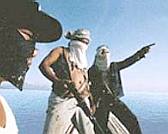
The only reason that Somalia is in the news these days is the spectacular desperation and criminality of the Somali pirates, an American sea captain held hostage by them, and Hollywood image sharp shooting by American Navy Seal commandoes to free him. This news will quickly fade but the reasons the Somali pirates exist and make news in the first place won’t fade. In the past year nearly forty ships have been hijacked off the coast of Somalia and millions have been paid out in ransom.
But the Somali pirates are not the modern day’s sea going Robin Hoods that some have tried to portray them as who rob from the rich, booty laden European and Asian ships and turn their riches over to their impoverished kin and villagers on the shore. They aren’t motivated as some Somali pirate mouthpieces have hinted, and backed up by some writers, as a kind of unofficial Coast Guard protecting their sea waters from plundering fisherman, and trying to halt illegal chemical and radioactive waste dumping off their coast.
A Somali pirate leader candidly told interviewers in Kenya last October after hijacking a Ukrainian freighter loaded with tanks, artillery, grenade launchers and ammunition that their sole motivation was to grab the ransom money.
It’s more than a money grab though that drives the pirates. It’s the never ending Somali crisis. The UN has described the security situation in Somalia as the worst the country has experienced since the early 1990s, while the UN's Food Security and Analysis Unit (FSAU) has described the level of human suffering and deprivation in Somalia as "shocking".

In the best of economic days Somalia still ranked near rock bottom on every economic and social scale of the world’s poorest countries. The same month that the Ukrainian ship was hijacked 52 non government organizations doing relief and humanitarian work in the country implored the UN to intervene in the crisis.
There is good reason for the urgent appeal. More than 3 million Somalis, or about half the country’s population, are in desperate need of emergency aid. This is a near one hundred percent increase in the aid stricken numbers from the start of 2008. The reasons for the desperation are well known; a devastating drought, record-high food prices, and a horrific and expanding war by gangster militia bands. The fighting in 2008 drove hundreds of thousands from their homes in the cities. The war fleeing refugees pushed the total of displaced persons to a staggering 1.1 million. The greatest impact of the suffering as always has fallen on the children. One in six children under five, or approximately 180,000 children, is acutely malnourished in South and Central Somalia.

Somalis are not the only ones who are in mortal danger from the raging violence. In 2008, 24 aid workers were killed and scores of others were kidnapped while carrying out their work. There were more than 100 reported security incidents directly targeting aid agencies. The majority of the aid workers are Somali nationals, but European workers have also been the victims.
The non government organizations did not simply beg the UN to intervene in the country’s crisis. They also lambasted international agencies for not doing more to protect civilians and aid workers alike.

The piracy escapades have made things worse in a couple of other ways. They have taken the glare off the dire conditions in the country since much of the Western press has fixated on the sensationalism of the piracy acts and President Obama’s response to it. Worse, the sea violence and the threat posed to shipping could disrupt the always precarious flow of food and medical supplies to the 1 million and daily increasing displaced persons in the country.
Several international donor groups have appealed to European and American donor groups to increase pressure on governments to formulate a plan to insure that the piracy doesn’t stop the flow of the aid.
A year ago, the Navy announced plans to build dozens of new smaller, more mobile combat ships to better chase down the pirates near the shore and maybe even hit their on shore bases. However the recent announcement by Defense Secretary Robert Gates, of defense budget cuts, puts that up in the air. Even if the ships are built that wouldn’t do much to stop the piracy. There are always hundreds more desperate, impoverished and violence scarred young men who would happily take the place of the pirates who American combat forces knock out.
Meanwhile, President Obama’s tough talk to frontally combat piracy is welcome and applauded by all. But the far bigger problem remains the never ending crisis of a broken, war torn nation that pushes thousands of men to high sea gangsterism. Navy Seal sharpshooters can’t do much to end that crisis.

Earl Ofari Hutchinson is an author and political analyst. His weekly radio show, “The Hutchinson Report” can be heard on weekly in Los Angeles on KTYM Radio 1460 AM and nationally on blogtalkradio.com
Thursday, April 9, 2009

An Honorary Degree for Kermit The Frog But Not President Obama


Earl Ofari Hutchinson

It’s not clear if Arizona State University President Michael Crow had any say in the decision not to grant President Obama, the school’s commencement speaker, an honorary degree. But one thing’s for sure the dumbest thing that school officials said in telling why they won’t grant an honorary degreee to President Obama was not that he didn’t have a credible body of work and thus supposedly was unfit for the honorary degree. It was that the commencement committee may not have even considered him for the degree in the first place. Here are the names of the wise ones on ASU’s Honorary Degrees Committee who snubbed President Obama for the honorary degreee.

Laurie Chassin, Psychology, 2010 (Chair) Christine Wilkinson, Senior Vice President and Secretary of the University, 2010 (Co-Chair) Roger Adelson, History, 2009 Bill Miller, Applied Biological Sciences, 2009 Joan Brett, Graduate College, 2010 Claudia Brown, Art, 2010 Chris Callahan, Walter Cronkite School of Journalism and Mass Communication, 2010 Philip Christensen, Earth and Space Exploration, 2010 Luis Gomez-Mejia, Management, 2010 Jewell Parker Rhodes, Virginia C. Piper Center for Creative Writing, 2010 Paul Patterson, Morrison School of Management and Agribusiness, 2010 Sander van der Leeuw, Human Evolution and Social Change, 2010 Linda Vaughan, Nutrition, 2010 Gary Waissi, ASU Global Engagement, 2010

The university vice provost and dean of the Graduate College; and the president of the ASU Foundation also are ex-officio members of the committee.

The committee members hail from all over the university map and they made no mention in the flurry of press announcements they put out variously explaining and defending the snub the exact criteria they used to determine why Obama didn’t cut the academic muster. That would be tough anyway. The whole thing is either ludicrous or farcical depending on how charitable one wants to be. By any measure--organization, political mastery, historic trend setting, his education and legal writings, research and instruction, and intellect—President Obama’s merits speak for themselves. And ASU officials pretty much acknowledged that by inviting him to give the commencement address in the first place.
The reason for the degree snub then can’t be lack of merit or a lack of a body of work. It’s something else and that something else speaks to the politics and money behind who gets an honorary degree and why they get it. In years past ASU has laddled them out to a laundry list of such academic wizards as a movie director, oil computer and microchip executives, and newpaper publishers. Universities, and that includes ASU, routinely hand out honorary degrees to a check list of fat cat contributors and donors. Universities have even been known to award them to politicians who have never taken pen to paper. This was the case in 2001 when Yale University awarded an honorary degree to George W. Bush. He was barely one year into his presidency. The sum of Bush’s academic accomplishment from Yale was a degree in history in 1968.

ASU also honored its favored political son, Barry M. Goldwater, with an honorary degree in 1961. It didn’t hurt that Goldwater was the state’s most influential US senator and could steer a lot of federal cash to the university. But a Goldwater honorary degree at least in that respect made some sense. Not sure if the same could be said for the recipient of the honorary degree from Long Island’s Southampton College in 1996. The academic marvel that year was a Sesame Street Muppet Kermit the Frog.
Then again maybe Kermit was more deserving than Bush since Kermit had used his celebrity to spread positive messages about environmental protection in public service announcements for the National Wildlife Federation, National Parks Service, the Better World Society, and other groups.
At least that’s what University officials said in defending Kermit’s honorary degree.

Then there are the universities such as the Massachusetts Institute of Technology, Cornell University Stanford University, the London School of Economics and Political Science and the University of Virginia. They play it close to the vest, maintain their level of real academic integrity and cut out the honorary degree sham.
ASU obviously isn’t on that elite list of academic non-honorary degree game players. And President Obama is not Bush or Kermit the Frog. So here’s how ASU President Crow can erase an embarassment. Ignore the Honor’s Committee’s blindspot toward or deliberate egg of the President, and bestow on him the award that he richly deserves, an honorary degree.

Earl Ofari Hutchinson is an author and political analyst. His weekly radio show, “The Hutchinson Report” can be heard on weekly in Los Angeles on KTYM Radio 1460 AM and nationally on blogtalkradio.com

Monday, April 6, 2009

Tribute to a Last Living Link to a Painful Past


Earl Ofari Hutchinson


The faint smile on Mrs. Gertrude Baines face midway through my tribute remarks to her was literally a smile for the ages. I, and a small group of well wishers, admirers, hospital staff, and reporters that gathered to pay a birthday tribute to Mrs. Baines on April 6 were witnesses to history; a living, breathing history filled with much pain and promise. At 115 years of age, Mrs. Bates, an African-American, had once more earned the proud and breath stopping distinction of being the world’s oldest person.
The Guinness Book of Records bestowed that title on her after a painstaking sift through stacks of official birth records. Along the way, it had discounted the claims from many worldwide of being the world’s oldest. An official from Guinness presented her with a proclamation at the birthday tribute that acknowledged her age feat.
I did not, however, give my remarks honoring Mrs. Baines to the assembled group solely because she had attained that amazing age, but rather for what she represents. At her world record shattering age and despite being permanently confined to a convalescent hospital, Mrs. Baines is still a strong role model for health and positive living. She also has a passion for the fight for justice. She is a member and solid supporter of the Main Gospel Church in Los Angeles, pastored by Warren J. Smith, who is one of the city’s top activist African-American ministers.
Smith is also a member of this writer’s education and public issues group, the Los Angeles Urban Policy Roundtable. The church has worked closely with the Roundtable in campaigns against gang and drug violence, police misconduct, job and housing discrimination, for juvenile justice reform, and political empowerment. In November, Mrs. Baines spoke proudly of how she had voted for and cheered on President Barack Obama. She considered this one of her proudest moments.
But Mrs. Baines also represents something even deeper and more profound. Her father was born into slavery in 1856. She is the daughter of a slave. She is one of the few last surviving links to the horror of slavery which is still a divisive, contentious and bitter part of the African-American past. Mrs. Baines’s life has spanned the near century of legal Jim Crow segregation, political disfranchisement, and racial brutality that followed slavery. Her life is a towering living reminder of and testament to the resilience, fortitude and courage of the many African-Americans who despite the odds overcame that terrible legacy and have done so much to enrich the social tapestry of America.
I was proud to say this directly to Mrs. Baines at her 115th birthday celebration. I was grateful when Mrs. Baines repaid me with her smile. Mrs. Baines truly lives as the eternal Mother Spirit of a people who have come so far against so much. She is a last living link to a painful part of the African-American past.

Earl Ofari Hutchinson is an author and political analyst. His weekly radio show, “The Hutchinson Report” can be heard on weekly in Los Angeles on KTYM Radio 1460 AM and nationally on blogtalkradio.com