Showing posts with label president obama. Show all posts

Monday, June 1, 2009

Obama Might Need to Show ID in More Places than East Harlem


Earl Ofari Hutchinson


The only thing wrong with New York Congressman Charles Rangel’s quip that President Obama had better bring his ID to East Harlem is that he limited it to East Harlem. A President Obama in his trademark baseball cap, sometimes hip clothes, and sneakers, sans White House entourage and limo, strolling or driving down a dimly lit night time street in any number of poor black neighborhoods could easily be stopped. He wouldn’t have to fit the near textbook profile of a poor, young, black male. He could just as easily be rich, older, a businessman, a professional, star athlete, college professor, or as in the horrific case of NYPD officer Omar Edwards, the police officer gunned down by a white cop.

There have been countless cases where prominent black men have been stopped, frisked, shaken down, and humiliated by police officers, trailed by store clerks, and fumed in anger as taxicabs whizzed by them on busy urban streets. Edwards is hardly the first black cop to be victimized by fellow officers. In recent years, there have been more than a few cases where white cops stopped, harassed, attempted to arrest, even arrested, and shot off duty black cops.
The wishful thought was that Obama’s election buried once and for all negative racial typecasting and the perennial threat it posed to the safety and well-being of black males. It did no such thing. Immediately after Obama’s election and months before Edwards was shot dead, teams of researchers from several major universities found that many of the old stereotypes about poverty and crime and blacks remain just as frozen in time. The study found that much of the public still perceives those most likely to commit crimes are poor, jobless and black. The study did more than affirm that race and poverty and crime are firmly rammed together in the public mind. It also showed that once the stereotype is planted, it’s virtually impossible to root out. That’s hardly new either.

In 2003 Penn State University researchers conducted a landmark study on the tie between crime and public perceptions of who is most likely to commit crime. The study found that many whites are likely to associate pictures of blacks with violent crime. This was no surprise given the relentless media depictions of young blacks as dysfunctional, dope peddling, gang bangers and drive by shooters.

The bulging numbers of blacks in America’s jails and prisons seem to reinforce the perception that crime and violence in America invariably comes with a young, black male face. And it doesn’t much matter how prominent, wealthy, or celebrated the black is. The overkill frenzy feeding on the criminal hijinks of former New York Giants wide receiver Plaxico Burress, O.J. Simpson, and the legions of black NFL, NBA stars, Hollywood personalities, and entertainers who run afoul of the law or are poorly behaved, and of course, everyone’s favorite stomping boy, the rappers and hip hop artists, further implants the negative image of black males. None of them are hardly poor, downtrodden, ghetto dwelling young black males.
There was, however, a mild surprise in the Penn State study. It found that even when blacks didn’t commit a specific crime; whites still misidentified the perpetrator as an African-American.

University researchers were plainly fascinated by this result. Five years later they wanted to see if that stereotype still held sway, even as Obama’s political star rose, and legions of whites said that they liked him, and would vote for him, and meant it. Researchers still found public attitudes on crime and race unchanged. The majority of whites still overwhelmingly fingered blacks as the most likely to commit crimes, even when they didn’t commit them. That’s especially important to say, since the fall back line on racial stereotypes is that to link race and crime is not to stereotype since blacks commit the majority of street crimes.

One implication for this is that Obama’s victory was more a personal triumph for him. It did not radically remap racial perceptions, let alone put an end to racial stereotyping. Another is that much of the public still sees crime and poverty through narrow racial lens.
An early newspaper account of the Edward’s shooting minced no words. It said that Edwards was mistaken for a thug. The brazen inference was that Edward’s clean cut look, police badge, and that he was doing his duty in giving chase to a criminal suspect didn’t exempt him from the young black male equals thug standard typecast. Edwards paid the price for that casting. And all Charlie Rangel was trying to say is that the casting could fit any young black who happens to be in the wrong place, at the wrong time, even if he’s a president.

Earl Ofari Hutchinson is an author and political analyst. His weekly radio show, “The Hutchinson Report” can be heard on weekly in Los Angeles at 9:30 AM Fridays on KTYM Radio 1460 AM and live streamed nationally on ktym.com

Sunday, April 26, 2009

100 Day Silliness


Earl Ofari Hutchinson


Then Democratic Presidential contender Barack Obama did a prescient thing last October. He told an interviewer on a Colorado radio station that he thought the first 1000 days not the first 100 days would make the crucial difference for his presidency. Candidate Obama directly parodied the line from JFK’s inauguration address in 1961. Kennedy proclaimed the first 1000 days as the better time frame to measure how effective or bumbling an administration is. Obama and JFK were wise to cite the much longer time frame. They sought to damp down the wild public expectations that they can work quick magic and miracles in no time flat.

Obama is well aware that the 100 days burden weighs heavier on him than any other president in modern times. He’s young, liberal, untested, and black. There are still deep doubts, suspicions and loud grumbles from some about his competency and political savvy. The Mt. Everest stack of op-eds, news articles, pictorials, websites, chatrooms, national viewer polls and surveys, and CNN and MSNBC specials will dissect, peck apart his words and initiatives for the first 100 days, and nag everyone else to do the same. That put even more pressure on to show he’s a tough, resolute, effective leader.

Obama in his quip to the Colorado radio interviewer knew the silliness of fixating on the drop in the bucket 100 day time span to brand a president and his presidency as a stunning success or a miserable flop. A quick look at the presidency of his two immediate predecessors is enough to prove that. Clinton bombed badly in pushing Congress for a $16 billion stimulus package; he bungled the don’t ask, don’t tell policy regarding gays in the military, and got the first flack on his health care reform plan. Yet, the Clinton presidency is regarded as one of the most successful, popular and enduring in modern times.

Then there’s the Bush presidency. He got off to a fast start. At the 100 day mark in April 2001, his approval ratings matched Obama’s. He was widely applauded for his trillion dollar tax cutting program, his "Faith-Based" and disabled Americans Initiatives, and for talking up education, health care reform and slashing the national debt. But aside from the momentary adulation he got after the 9/11 terror attack his presidency is rated as one of the worst in modern times.

The 1000 day mark that Obama, Kennedy and other presidents have cited as the more realistic time frame is not an arbitrary number. That marks the near end of a president’s first White House term. The honeymoon is over, and the president has fought major battles over his policies, initiatives, executive orders, court appointments and programs with Congress, the courts, interest groups and the media. Battles that by then have been won or lost, or fought to a draw, and there’s enough time to gauge their impact and the president’s effectiveness.

The other big problem with the whimsical 100 day fixation is that it can force a president, in this case Obama, to feel that he must move sprint out the gate to fulfill campaign promises, pass legislation, and burnish up his media and public credentials as a top leader. This carries risks; risks of acting too hastily and making missteps that invite intense criticism.

Obama’s dash to padlock Guantanamo, announce big sweeping plans for health care, financial and banking regulation reform, his much ado about nothing handshake with Hugo Chavez, his outstretch to Iran, and Cuba, and hint at dumping nuclear weapons from the world’s arsenals has drawn heat fire from the right that he’s a reckless tax and spend, debt burdening, free market wrecker, and enemy conciliator. His mixed signals on prosecuting CIA torture cases and retaining virtually intact the faith based initiative, and ladling out billions to the banks have drawn heat from the left that he’s a backslider and Beltway politician.

Obama, though, is no different than other every other president modern era. He is pulled and tugged at by corporate and defense industry lobbyists, the oil and nuclear power industry, government regulators, environmental watchdog groups, conservative family values groups, moderate and conservative GOP senators and house members, foreign diplomats and leaders. They all have their priorities and agendas and all vie for White House support for their pet legislation, or to kill or cripple legislation that threatens their interests. They’ll applaud him when they get their way and bash him when they don’t.

Obama did another smart thing in his first presidential interview with 60 Minutes in November. He told the interviewer that he took a close look at FDR’s first 100 days and he was struck not by the avalanche of legislation and programs that FDR rammed through Congress his first 100 days but his willingness to do things that were different and that made lasting change. This will take far more than 100 days for that to happen and for it to be remembered.

Earl Ofari Hutchinson is an author and political analyst. His weekly radio show, “The Hutchinson Report” can be heard on weekly on Fridays 9:30 to 10:00 AM in Los Angeles on KTYM Radio 1460 AM and nationally on ktym.com and blogtalkradio.com

Tuesday, April 14, 2009

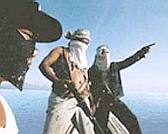
Navy Seal Sharpshooters Can’t End the Somali Crisis


Earl Ofari Hutchinson

The only reason that Somalia is in the news these days is the spectacular desperation and criminality of the Somali pirates, an American sea captain held hostage by them, and Hollywood image sharp shooting by American Navy Seal commandoes to free him. This news will quickly fade but the reasons the Somali pirates exist and make news in the first place won’t fade. In the past year nearly forty ships have been hijacked off the coast of Somalia and millions have been paid out in ransom.
But the Somali pirates are not the modern day’s sea going Robin Hoods that some have tried to portray them as who rob from the rich, booty laden European and Asian ships and turn their riches over to their impoverished kin and villagers on the shore. They aren’t motivated as some Somali pirate mouthpieces have hinted, and backed up by some writers, as a kind of unofficial Coast Guard protecting their sea waters from plundering fisherman, and trying to halt illegal chemical and radioactive waste dumping off their coast.
A Somali pirate leader candidly told interviewers in Kenya last October after hijacking a Ukrainian freighter loaded with tanks, artillery, grenade launchers and ammunition that their sole motivation was to grab the ransom money.
It’s more than a money grab though that drives the pirates. It’s the never ending Somali crisis. The UN has described the security situation in Somalia as the worst the country has experienced since the early 1990s, while the UN's Food Security and Analysis Unit (FSAU) has described the level of human suffering and deprivation in Somalia as "shocking".

In the best of economic days Somalia still ranked near rock bottom on every economic and social scale of the world’s poorest countries. The same month that the Ukrainian ship was hijacked 52 non government organizations doing relief and humanitarian work in the country implored the UN to intervene in the crisis.
There is good reason for the urgent appeal. More than 3 million Somalis, or about half the country’s population, are in desperate need of emergency aid. This is a near one hundred percent increase in the aid stricken numbers from the start of 2008. The reasons for the desperation are well known; a devastating drought, record-high food prices, and a horrific and expanding war by gangster militia bands. The fighting in 2008 drove hundreds of thousands from their homes in the cities. The war fleeing refugees pushed the total of displaced persons to a staggering 1.1 million. The greatest impact of the suffering as always has fallen on the children. One in six children under five, or approximately 180,000 children, is acutely malnourished in South and Central Somalia.

Somalis are not the only ones who are in mortal danger from the raging violence. In 2008, 24 aid workers were killed and scores of others were kidnapped while carrying out their work. There were more than 100 reported security incidents directly targeting aid agencies. The majority of the aid workers are Somali nationals, but European workers have also been the victims.
The non government organizations did not simply beg the UN to intervene in the country’s crisis. They also lambasted international agencies for not doing more to protect civilians and aid workers alike.

The piracy escapades have made things worse in a couple of other ways. They have taken the glare off the dire conditions in the country since much of the Western press has fixated on the sensationalism of the piracy acts and President Obama’s response to it. Worse, the sea violence and the threat posed to shipping could disrupt the always precarious flow of food and medical supplies to the 1 million and daily increasing displaced persons in the country.
Several international donor groups have appealed to European and American donor groups to increase pressure on governments to formulate a plan to insure that the piracy doesn’t stop the flow of the aid.
A year ago, the Navy announced plans to build dozens of new smaller, more mobile combat ships to better chase down the pirates near the shore and maybe even hit their on shore bases. However the recent announcement by Defense Secretary Robert Gates, of defense budget cuts, puts that up in the air. Even if the ships are built that wouldn’t do much to stop the piracy. There are always hundreds more desperate, impoverished and violence scarred young men who would happily take the place of the pirates who American combat forces knock out.
Meanwhile, President Obama’s tough talk to frontally combat piracy is welcome and applauded by all. But the far bigger problem remains the never ending crisis of a broken, war torn nation that pushes thousands of men to high sea gangsterism. Navy Seal sharpshooters can’t do much to end that crisis.

Earl Ofari Hutchinson is an author and political analyst. His weekly radio show, “The Hutchinson Report” can be heard on weekly in Los Angeles on KTYM Radio 1460 AM and nationally on blogtalkradio.com

Tuesday, March 17, 2009

AIG’s Minority Racket


Earl Ofari Hutchinson


AIG ignited the national firestorm of rage with its shell out of $160 to $600 million in tainted bonuses to its tainted executives. But what has gotten almost no attention is a big reason that AIG had to stiff the government and everyone else. That’s the role that the company played in the subprime loan racket; a racket that hurt and still hurts tens of thousands of would be black and Latino homeowners.
The lender’s bait and switch tactics, the deliberately garbled contracts, deceptive and faulty lending, questionable accounting practices, and charged hidden fees, all with the connivance of sleepy-eyed see-no-evil oversight of federal regulators, are well known and documented. Their snake oil loan peddling wreaked havoc with thousands of mostly poor, strapped homeowners. A disproportionate number of them were Latinos and African-Americans.
Enter AIG. It saw a, treasure trove of fast buck riches in the subprime business. AIG dumped $33 billion into bonds and securities that were tied directly to subprime loans. This was nearly four times more than the next insurer, the German-based Allianz SE, had invested in the subprime loans. In fact, AIG was the only US based life insurer that had more than 3 percent of their general account assets in debts tied to subprime loans.
In early 2007 things started to unravel. AIG reported a first quarter loss of more than $2 billion in its subprime mortgage bonds. This set off the first warning bell that AIG could implode. Bond traders openly worried that AIG’s subprime securities losses could drag the market down. They had good reason to worry.
AIG is first and foremost an insurer. And in addition to its plunging bond and security holdings, the company also insured restructured subprime home bonds. The assumption by the subrprime bond holders was that the bonds would lose only a fraction of their value. But by then subprime defaults had piled up to a ten year high and the subprime lending market, that was all of it stocks, bonds and insurance, had badly frayed.


AIG’s stock had plunged 60 percent within the year. The top rating agencies, Moody's and Standard and Poor's, concerned over AIG’s continuing losses on subprime and other mortgage-backed securities, downgraded their credit rating. They demanded that company pay billions to creditors in order to bump back up their ratings. That was billions that AIG by then didn’t have.


AIG was clearly on a non stop down hill roller coaster ride, and many banks and lenders, were heading to perdition with them. AIG briefly flirted with the notion of filing for subprime mortgage lenders bankruptcy.
But there was a better deal to be had courtesy of a panicked then President Bush and Treasury Secretary Henry Paulson. They shoved out tens of billions in cash in what turned out to be only the first installment of cash to save AIG’s hide.
We may never know the full extent of the financial damage that AIG caused in the subprime market. Nor how manyprospective minority homeowners suffered losses both financial and personal from the company’s greed. United for a Fair Economy, a public advocacy research group, in an in-depth study on sub prime lending estimates that the tab for minorities for the dubious blending practices runs to more than $200 billion in lost equity and income during the years AIG and the subprime bank lenders ran amok. The group called the home losses the most massive loss of wealth for African Americans in U.S. history.
The ultimate tragedy is that many blacks who were enticed by the lenders through their web of lies and deceit into taking the risky sub prime loans didn’t really need them. Data from the Home Mortgage Disclosure Act found that about 40 percent of the black subprime borrowers could have qualified for cheaper mainstream mortgages.
But that was the last thing that the subprime lenders, let alone AIG wanted. This would have taken a big bite out of their fantasy level profits. In the end those profits turned out to be a smoke and mirrors illusion just as the subprime illusion was.
AIG happily aided and abetted the banks and lenders in their decade long fast and loose play with the lending rules. Taxpayers are, of course, paying and paying dearly for AIG’s greed and malfeasance. But thousands of black and Latino hoped to be homeowners are also paying for that greed. AIG’s minority racket is yet another sorry chapter in the AIG saga.

Earl Ofari Hutchinson is an author and political analyst. His new book is How Obama Won (Middle Passage Press, January 2009).