Sunday, April 26, 2009

100 Day Silliness


Earl Ofari Hutchinson


Then Democratic Presidential contender Barack Obama did a prescient thing last October. He told an interviewer on a Colorado radio station that he thought the first 1000 days not the first 100 days would make the crucial difference for his presidency. Candidate Obama directly parodied the line from JFK’s inauguration address in 1961. Kennedy proclaimed the first 1000 days as the better time frame to measure how effective or bumbling an administration is. Obama and JFK were wise to cite the much longer time frame. They sought to damp down the wild public expectations that they can work quick magic and miracles in no time flat.

Obama is well aware that the 100 days burden weighs heavier on him than any other president in modern times. He’s young, liberal, untested, and black. There are still deep doubts, suspicions and loud grumbles from some about his competency and political savvy. The Mt. Everest stack of op-eds, news articles, pictorials, websites, chatrooms, national viewer polls and surveys, and CNN and MSNBC specials will dissect, peck apart his words and initiatives for the first 100 days, and nag everyone else to do the same. That put even more pressure on to show he’s a tough, resolute, effective leader.

Obama in his quip to the Colorado radio interviewer knew the silliness of fixating on the drop in the bucket 100 day time span to brand a president and his presidency as a stunning success or a miserable flop. A quick look at the presidency of his two immediate predecessors is enough to prove that. Clinton bombed badly in pushing Congress for a $16 billion stimulus package; he bungled the don’t ask, don’t tell policy regarding gays in the military, and got the first flack on his health care reform plan. Yet, the Clinton presidency is regarded as one of the most successful, popular and enduring in modern times.

Then there’s the Bush presidency. He got off to a fast start. At the 100 day mark in April 2001, his approval ratings matched Obama’s. He was widely applauded for his trillion dollar tax cutting program, his "Faith-Based" and disabled Americans Initiatives, and for talking up education, health care reform and slashing the national debt. But aside from the momentary adulation he got after the 9/11 terror attack his presidency is rated as one of the worst in modern times.

The 1000 day mark that Obama, Kennedy and other presidents have cited as the more realistic time frame is not an arbitrary number. That marks the near end of a president’s first White House term. The honeymoon is over, and the president has fought major battles over his policies, initiatives, executive orders, court appointments and programs with Congress, the courts, interest groups and the media. Battles that by then have been won or lost, or fought to a draw, and there’s enough time to gauge their impact and the president’s effectiveness.

The other big problem with the whimsical 100 day fixation is that it can force a president, in this case Obama, to feel that he must move sprint out the gate to fulfill campaign promises, pass legislation, and burnish up his media and public credentials as a top leader. This carries risks; risks of acting too hastily and making missteps that invite intense criticism.

Obama’s dash to padlock Guantanamo, announce big sweeping plans for health care, financial and banking regulation reform, his much ado about nothing handshake with Hugo Chavez, his outstretch to Iran, and Cuba, and hint at dumping nuclear weapons from the world’s arsenals has drawn heat fire from the right that he’s a reckless tax and spend, debt burdening, free market wrecker, and enemy conciliator. His mixed signals on prosecuting CIA torture cases and retaining virtually intact the faith based initiative, and ladling out billions to the banks have drawn heat from the left that he’s a backslider and Beltway politician.

Obama, though, is no different than other every other president modern era. He is pulled and tugged at by corporate and defense industry lobbyists, the oil and nuclear power industry, government regulators, environmental watchdog groups, conservative family values groups, moderate and conservative GOP senators and house members, foreign diplomats and leaders. They all have their priorities and agendas and all vie for White House support for their pet legislation, or to kill or cripple legislation that threatens their interests. They’ll applaud him when they get their way and bash him when they don’t.

Obama did another smart thing in his first presidential interview with 60 Minutes in November. He told the interviewer that he took a close look at FDR’s first 100 days and he was struck not by the avalanche of legislation and programs that FDR rammed through Congress his first 100 days but his willingness to do things that were different and that made lasting change. This will take far more than 100 days for that to happen and for it to be remembered.

Earl Ofari Hutchinson is an author and political analyst. His weekly radio show, “The Hutchinson Report” can be heard on weekly on Fridays 9:30 to 10:00 AM in Los Angeles on KTYM Radio 1460 AM and nationally on ktym.com and blogtalkradio.com

Tuesday, April 14, 2009

Navy Seal Sharpshooters Can’t End the Somali Crisis


Earl Ofari Hutchinson

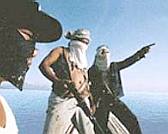
The only reason that Somalia is in the news these days is the spectacular desperation and criminality of the Somali pirates, an American sea captain held hostage by them, and Hollywood image sharp shooting by American Navy Seal commandoes to free him. This news will quickly fade but the reasons the Somali pirates exist and make news in the first place won’t fade. In the past year nearly forty ships have been hijacked off the coast of Somalia and millions have been paid out in ransom.
But the Somali pirates are not the modern day’s sea going Robin Hoods that some have tried to portray them as who rob from the rich, booty laden European and Asian ships and turn their riches over to their impoverished kin and villagers on the shore. They aren’t motivated as some Somali pirate mouthpieces have hinted, and backed up by some writers, as a kind of unofficial Coast Guard protecting their sea waters from plundering fisherman, and trying to halt illegal chemical and radioactive waste dumping off their coast.
A Somali pirate leader candidly told interviewers in Kenya last October after hijacking a Ukrainian freighter loaded with tanks, artillery, grenade launchers and ammunition that their sole motivation was to grab the ransom money.
It’s more than a money grab though that drives the pirates. It’s the never ending Somali crisis. The UN has described the security situation in Somalia as the worst the country has experienced since the early 1990s, while the UN's Food Security and Analysis Unit (FSAU) has described the level of human suffering and deprivation in Somalia as "shocking".

In the best of economic days Somalia still ranked near rock bottom on every economic and social scale of the world’s poorest countries. The same month that the Ukrainian ship was hijacked 52 non government organizations doing relief and humanitarian work in the country implored the UN to intervene in the crisis.
There is good reason for the urgent appeal. More than 3 million Somalis, or about half the country’s population, are in desperate need of emergency aid. This is a near one hundred percent increase in the aid stricken numbers from the start of 2008. The reasons for the desperation are well known; a devastating drought, record-high food prices, and a horrific and expanding war by gangster militia bands. The fighting in 2008 drove hundreds of thousands from their homes in the cities. The war fleeing refugees pushed the total of displaced persons to a staggering 1.1 million. The greatest impact of the suffering as always has fallen on the children. One in six children under five, or approximately 180,000 children, is acutely malnourished in South and Central Somalia.

Somalis are not the only ones who are in mortal danger from the raging violence. In 2008, 24 aid workers were killed and scores of others were kidnapped while carrying out their work. There were more than 100 reported security incidents directly targeting aid agencies. The majority of the aid workers are Somali nationals, but European workers have also been the victims.
The non government organizations did not simply beg the UN to intervene in the country’s crisis. They also lambasted international agencies for not doing more to protect civilians and aid workers alike.

The piracy escapades have made things worse in a couple of other ways. They have taken the glare off the dire conditions in the country since much of the Western press has fixated on the sensationalism of the piracy acts and President Obama’s response to it. Worse, the sea violence and the threat posed to shipping could disrupt the always precarious flow of food and medical supplies to the 1 million and daily increasing displaced persons in the country.
Several international donor groups have appealed to European and American donor groups to increase pressure on governments to formulate a plan to insure that the piracy doesn’t stop the flow of the aid.
A year ago, the Navy announced plans to build dozens of new smaller, more mobile combat ships to better chase down the pirates near the shore and maybe even hit their on shore bases. However the recent announcement by Defense Secretary Robert Gates, of defense budget cuts, puts that up in the air. Even if the ships are built that wouldn’t do much to stop the piracy. There are always hundreds more desperate, impoverished and violence scarred young men who would happily take the place of the pirates who American combat forces knock out.
Meanwhile, President Obama’s tough talk to frontally combat piracy is welcome and applauded by all. But the far bigger problem remains the never ending crisis of a broken, war torn nation that pushes thousands of men to high sea gangsterism. Navy Seal sharpshooters can’t do much to end that crisis.

Earl Ofari Hutchinson is an author and political analyst. His weekly radio show, “The Hutchinson Report” can be heard on weekly in Los Angeles on KTYM Radio 1460 AM and nationally on blogtalkradio.com

Thursday, April 9, 2009

An Honorary Degree for Kermit The Frog But Not President Obama


Earl Ofari Hutchinson

It’s not clear if Arizona State University President Michael Crow had any say in the decision not to grant President Obama, the school’s commencement speaker, an honorary degree. But one thing’s for sure the dumbest thing that school officials said in telling why they won’t grant an honorary degreee to President Obama was not that he didn’t have a credible body of work and thus supposedly was unfit for the honorary degree. It was that the commencement committee may not have even considered him for the degree in the first place. Here are the names of the wise ones on ASU’s Honorary Degrees Committee who snubbed President Obama for the honorary degreee.

Laurie Chassin, Psychology, 2010 (Chair) Christine Wilkinson, Senior Vice President and Secretary of the University, 2010 (Co-Chair) Roger Adelson, History, 2009 Bill Miller, Applied Biological Sciences, 2009 Joan Brett, Graduate College, 2010 Claudia Brown, Art, 2010 Chris Callahan, Walter Cronkite School of Journalism and Mass Communication, 2010 Philip Christensen, Earth and Space Exploration, 2010 Luis Gomez-Mejia, Management, 2010 Jewell Parker Rhodes, Virginia C. Piper Center for Creative Writing, 2010 Paul Patterson, Morrison School of Management and Agribusiness, 2010 Sander van der Leeuw, Human Evolution and Social Change, 2010 Linda Vaughan, Nutrition, 2010 Gary Waissi, ASU Global Engagement, 2010

The university vice provost and dean of the Graduate College; and the president of the ASU Foundation also are ex-officio members of the committee.

The committee members hail from all over the university map and they made no mention in the flurry of press announcements they put out variously explaining and defending the snub the exact criteria they used to determine why Obama didn’t cut the academic muster. That would be tough anyway. The whole thing is either ludicrous or farcical depending on how charitable one wants to be. By any measure--organization, political mastery, historic trend setting, his education and legal writings, research and instruction, and intellect—President Obama’s merits speak for themselves. And ASU officials pretty much acknowledged that by inviting him to give the commencement address in the first place.
The reason for the degree snub then can’t be lack of merit or a lack of a body of work. It’s something else and that something else speaks to the politics and money behind who gets an honorary degree and why they get it. In years past ASU has laddled them out to a laundry list of such academic wizards as a movie director, oil computer and microchip executives, and newpaper publishers. Universities, and that includes ASU, routinely hand out honorary degrees to a check list of fat cat contributors and donors. Universities have even been known to award them to politicians who have never taken pen to paper. This was the case in 2001 when Yale University awarded an honorary degree to George W. Bush. He was barely one year into his presidency. The sum of Bush’s academic accomplishment from Yale was a degree in history in 1968.

ASU also honored its favored political son, Barry M. Goldwater, with an honorary degree in 1961. It didn’t hurt that Goldwater was the state’s most influential US senator and could steer a lot of federal cash to the university. But a Goldwater honorary degree at least in that respect made some sense. Not sure if the same could be said for the recipient of the honorary degree from Long Island’s Southampton College in 1996. The academic marvel that year was a Sesame Street Muppet Kermit the Frog.
Then again maybe Kermit was more deserving than Bush since Kermit had used his celebrity to spread positive messages about environmental protection in public service announcements for the National Wildlife Federation, National Parks Service, the Better World Society, and other groups.
At least that’s what University officials said in defending Kermit’s honorary degree.

Then there are the universities such as the Massachusetts Institute of Technology, Cornell University Stanford University, the London School of Economics and Political Science and the University of Virginia. They play it close to the vest, maintain their level of real academic integrity and cut out the honorary degree sham.
ASU obviously isn’t on that elite list of academic non-honorary degree game players. And President Obama is not Bush or Kermit the Frog. So here’s how ASU President Crow can erase an embarassment. Ignore the Honor’s Committee’s blindspot toward or deliberate egg of the President, and bestow on him the award that he richly deserves, an honorary degree.

Earl Ofari Hutchinson is an author and political analyst. His weekly radio show, “The Hutchinson Report” can be heard on weekly in Los Angeles on KTYM Radio 1460 AM and nationally on blogtalkradio.com

Monday, April 6, 2009

Tribute to a Last Living Link to a Painful Past


Earl Ofari Hutchinson


The faint smile on Mrs. Gertrude Baines face midway through my tribute remarks to her was literally a smile for the ages. I, and a small group of well wishers, admirers, hospital staff, and reporters that gathered to pay a birthday tribute to Mrs. Baines on April 6 were witnesses to history; a living, breathing history filled with much pain and promise. At 115 years of age, Mrs. Bates, an African-American, had once more earned the proud and breath stopping distinction of being the world’s oldest person.
The Guinness Book of Records bestowed that title on her after a painstaking sift through stacks of official birth records. Along the way, it had discounted the claims from many worldwide of being the world’s oldest. An official from Guinness presented her with a proclamation at the birthday tribute that acknowledged her age feat.
I did not, however, give my remarks honoring Mrs. Baines to the assembled group solely because she had attained that amazing age, but rather for what she represents. At her world record shattering age and despite being permanently confined to a convalescent hospital, Mrs. Baines is still a strong role model for health and positive living. She also has a passion for the fight for justice. She is a member and solid supporter of the Main Gospel Church in Los Angeles, pastored by Warren J. Smith, who is one of the city’s top activist African-American ministers.
Smith is also a member of this writer’s education and public issues group, the Los Angeles Urban Policy Roundtable. The church has worked closely with the Roundtable in campaigns against gang and drug violence, police misconduct, job and housing discrimination, for juvenile justice reform, and political empowerment. In November, Mrs. Baines spoke proudly of how she had voted for and cheered on President Barack Obama. She considered this one of her proudest moments.
But Mrs. Baines also represents something even deeper and more profound. Her father was born into slavery in 1856. She is the daughter of a slave. She is one of the few last surviving links to the horror of slavery which is still a divisive, contentious and bitter part of the African-American past. Mrs. Baines’s life has spanned the near century of legal Jim Crow segregation, political disfranchisement, and racial brutality that followed slavery. Her life is a towering living reminder of and testament to the resilience, fortitude and courage of the many African-Americans who despite the odds overcame that terrible legacy and have done so much to enrich the social tapestry of America.
I was proud to say this directly to Mrs. Baines at her 115th birthday celebration. I was grateful when Mrs. Baines repaid me with her smile. Mrs. Baines truly lives as the eternal Mother Spirit of a people who have come so far against so much. She is a last living link to a painful part of the African-American past.

Earl Ofari Hutchinson is an author and political analyst. His weekly radio show, “The Hutchinson Report” can be heard on weekly in Los Angeles on KTYM Radio 1460 AM and nationally on blogtalkradio.com

Monday, March 30, 2009

Madonna Deserves Cheers Not Jeers for Casting Light on Africa’s Orphan Misery


Earl Ofari Hutchinson
First an outfit called Save the Children UK butted in and denounced Madonna for adopting Malawi orphan David Banda in 2006. Now another bunch has jumped into the adoption fray and branded her a”bully” for her plans to adopt another Malawi orphan. The Human Rights Consultative Committee pretty much rehashed the same tired complaint as Save the Children UK did three years back and that’s that Madonna is using her wealth and star power to end around Malawi’s adoption procedures.

Madonna ignored Save the Children UK in 2006 with their silly bellyache and she’ll likely do the same with the Consultative Committee. The figures tell the grim tale of why she should. According to UN estimates half of the 1 million Malwaian children with one or no parents are orphaned by AIDS. More than 13 percent of Malawi’s 13 million are poor, dirt poor, and not surprisingly the majority of them are women.

Malawi is hardly an aberration. More than 12 million children have lost one parent or are orphans in African nations. And given the still rampant disease, warfare and poverty that plague many of these countries, the number of orphans or near-orphans will soar to nearly 20 million next year. Apart from a string of cramped, desperately under-funded and in many cases unsafe orphanages in sub-Saharan Africa, many of these children are doomed to live out their childhood years in a caretaker existence.

That’s only the start of Africa’s orphan misery. Africa's orphans are still mostly unwanted anywhere else in the world, and that includes the United States. In 2005, more than 20,000 immigrant visas were issued to orphan children whom Americans adopted from other nations. Ethiopia, with a paltry 441 orphans taken in by Americans, was the only African country that cracked the top-10 list. Liberia and Nigeria were the only other African nations among the top-20 nations, with 182 and 82orphans taken in by Americans.

Madonna has raised millions through her Raise Malawi Organization to fight poverty and disease in the country. She’s made plans to build a school for young women there, and done more than any other celebrity too raise attention to the plight of Malawian orphans and women. Madonna could easily have been like the legion of air head stars whose idea of helping the poor is an annual photo-op mug shoot at a high profile, star studded, red carpet gala. Instead she put her money and name behind tackling one of the world’s toughest problems and that’s providing a better life for Africa’s dispossessed children. For that she’s piteously ragged on, sniped at, and backbitten, by every media chasing hound, and a handful of sanctimonious orphan relief groups. Why?

One reason for that is loudly and publicly stated. The other is unstated, and more contemptible.

Human rights and child protection groups claim that Madonna tossed her money and celebrity weight around to bend Malawi's adoption laws and fast-track the adoption, and that the adoption is another celebrity publicity stunt. Both are falsehoods. She observed the rules in 2006 with the adoption of Banda, and Malawi's courts have granted her an interim adoption order. She also kicked in a lot of dollars to boost orphanage services in the country. As one of the world's best-known superstars, with legions of paparazzi jumping at the chance to record her every cough, Madonna hardly needs to snatch an African child to grab some camera action.

The unstated, and more contemptible, reason that certain groups and individuals are upset about the adoption is the archaic notion that a white person, especially a wealthy white celebrity, is culturally clueless when it comes to raising a black child. Or worse, that they'll whitewash the child's black identity and tout white values (whatever they are).

What makes this notion even more dumb is that the crisis is not just one in which African babies are shunned in America -- African-American orphans are too. There are more than a half-million children in foster care homes in America. Nearly 40 percent of them are African-Americans. They stay in foster care homes on average a year longer than white children.

There is absolutely no hard evidence that the race of the adopting parent has much to do with whether an adopted child matures into a healthy, emotionally secure adult. The key is that the home must be loving, nurturing and financially stable. There is also little evidence that black children raised by white parents suffer permanent racial or cultural identity amnesia. Race and racism are still alive enough and in enough places in American society to insure that black children can't and won't forget that they're black. We need look no further than the man who sits behind the desk in the Oval office for proof of that.

Madonna did a huge service by using her star power not to exploit but to cast light on Malawi and Africa's orphan misery. You go Madonna.

Earl Ofari Hutchinson is an author and political analyst. His weekly radio show, “The Hutchinson Report” can be heard in Los Angeles on KTYM Radio 1460 AM and streamed nationally on blogtalkradio.com

Thursday, March 26, 2009

An Apology for Profiling Ryan Moats (and any other Black) is never enough


Earl Ofari Hutchinson


Maybe Dallas Police Chief David Kunkle forgot this:

Texas Code of Criminal Procedure, Article 2.131,

“A peace officer may not engage in racial profiling. Law enforcement-initiated action based on an individual's race, ethnicity, or national origin rather than on the individual's behavior or on information identifying the individual as having engaged in criminal activity.”

After the ordeal straight out of Hell that Houston Texans running back Ryan Moats went through the chief may have had a memory lapse. Moats who is African-American gets word that his wife’s mother is near death at Baylor Regional Medical Center in Plano, Texas (a Dallas suburb). He and his wife rush to the hospital to be at her side in her final hours. But Dallas police officer Robert Powell (white) has other ideas. He corrals Moats, his wife and another female passenger in the medical center parking lot and in what can only be described as a surreal scene, pulls his gun on them, waves it around at Moats, his wife, and orders them to stand down. He then turns two tone deaf ears to Moats’s frantic efforts to explain that his mother-in-law is inside dying. Instead he mouths off at him. Moats won’t say it he’s got too much class for that, but no matter how profusely the Dallas chief apologizes, which to his credit he did, Moats and his wife were racially profiled.

The bone head stop of Moat’s did more than give Dallas police a black eye and cause city official to scramble for damage control. It also cast suspicion on just how serious police agencies are in wiping out racial profiling. They all swear to the heavens that their officers don’t profile. They have to; they’ve taken to much heat for it. In fact, the Texas statute that forbids racial profiling mandates that all Texas police departments file annual stats on motorist stops—by race. Dallas patted itself on the back in a city report in 2008 for seriously addressing all areas of concern about racial profiling and evaluating department procedures to insure that it doesn’t happen. But the Moats stop proves that what the department puts on paper and what happens in the streets means it still has a long way to go to achieve its stated goal of providing “public service that is effective and fair.”

Powell in his weak kneed half hearted defense, wailed that he thought he was following procedure, and just doing his job. In a twisted way he’s probably right, and that’s even more reason to doubt that Dallas and indeed other departments are really doing all they say they are to root out racial profiling.

Even by the jaded and dumb action of far too many cops who still think good law enforcement is pulling every twenty something young black male that they eyeball on the streets over, Moats’s ordeal was extreme.

Moats should slap the Dallas and its police department with Mt. Everest dollar size lawsuit. That won’t bring back his mother-in-law or erase the pain of knowing that the moments he spent being hectored by Powell were moments that he should have been at his mother-in-law’s bedside. But Dallas still must pay, and pay dearly for that. An apology for what he went through is simply not enough.

Earl Ofari Hutchinson is an author and political analyst. His weekly radio show, “The Hutchinson Report” can be heard weekly in Los Angeles on KTYM Radio 1460 AM and nationally on blogtalkradio.com

Monday, March 23, 2009

Oakland Police Massacre Casts Ugly Glare on Ex-Felon Desperation


Earl Ofari Hutchinson


A general consensus is that it was a deadly mix of panic, rage, and frustration that caused Lovelle Mixon to snap. His shocking murderous rampage left 4 Oakland police officers dead and a city and police agencies in deep soul search abut what went so terribly wrong. Though Mixon’s killing spree is a horrible aberration, his plight as an unemployed, ex-felon isn’t. There are tens of thousands like him on America’s streets.

In 2007, the National Institute of Justice found that 60 percent of ex-felon offenders remain unemployed a year after their release. Other studies have shown that upwards of thirty percent of felon releases live in homeless shelters because of their inability to find housing; and those are the lucky ones. Many camp out on the streets.

A significant number of them suffer from drug, alcohol and mental health challenges, and lack education or any marketable skills. More than seventy percent of all U.S. prisoners are literate at only the two lowest grade levels. Nearly 60 % of violent felons are repeat offenders. They are menace to themselves and as the nation saw with Mixon, to others. In some cases, they can be set off by any real or perceived slight, insult, or simply lash out from bitter rage. Mixon was one and he made four Oakland police officers victims and left a terrible trail of grieving and distraught families and a shell-shocked city and police department.

The answer to the Mixons’ isn’t easy and simple. The need is strike a fine and delicate balance between public safety and ex-felon rehabilitation. A big obstacle to making ex-felons law abiding, productive citizens is still the inability of many ex-felons to find jobs. City officials in Los Angeles, San Francisco, Washington D.C., Chicago, New York, and Atlanta have been repeatedly challenged to take action to end employer discrimination against ex-felons. The demand has been to restrict what employers can and can’t ask on job applications.

In a revealing study in 2003 and duplicated again several years later Northwestern University professor Devah Pager hired groups of African American and white young men with identical resumes and experience to pose as job applicants. Some were told to say they had a drug felony. The study found that a check when they checked the felony conviction box on applications it reduced the white applicants' chance of an interview by 50 %. For black applicants' their chance of landing the job was reduced by two-thirds.

To counter employer discrimination against ex-felons, nearly a dozen states and counties and cities have enacted laws in recent years to sharply limit what employers can ask applicants about criminal records. But that reform effort has stirred fierce resistance from employer groups. Washington D.C. is a near textbook example of that. Nearly 3,000 former prisoners are released and return to the District each year. Most fit the standard ex-felon profile. They are poor, with limited or education, and job skills, and come from broken or dysfunctional homes. Researchers again found that the single biggest thing that pushed them back to the streets, crime, violence and inevitably repeat incarceration was their failure to find work.

In 2007, the D.C. city council passed a measure that would have banned discrimination in employment as well as housing and education against ex-felons. It was vetoed by then Mayor Anthony A. Williams. The heat on Williams came from business groups who claimed that they’d be sued by rejected applicants.

Similar legislation has been kicking around in Congress since 2005. It hasn’t fared much better. The bill called the Second Chance Act is a relatively mild measure to pump about $100 million to local and state agencies for education, job and skills training, counseling, and family unification programs to stem the high rate of recidivism among ex-felons.

President Obama has often spoken of the need to unhinge the revolving door of felon release and reincarceration. He backs the Second Chance legislation. But with the economy and the financial crisis dominating the White House and Congressional agendas the likelihood that ex-felon aid will get immediate attention is slim.

In the meantime, the ranks of the felon underclass will continue to balloon. At last count, there were an estimated 12 million people in the U.S. with felony convictions. That’s nearly 10 percent of working-age population. And with jails bulging and states desperately trying to figure out how to cut jail costs and increasingly resorting to early release, more ex-felons will be on the streets. The current estimate is that more than 600,000 offenders are now being released from prisons yearly.

Mixon unfortunately was one of them. And others like him are ticking time bombs that endanger themselves and others. Oakland tragically showed that.

Earl Ofari Hutchinson is an author and political analyst. His weekly radio show, “The Hutchinson Report” can be heard in Los Angeles on KTYM 1460 AM and nationally on blogtalkradio.com